|
Check our our
and .
The Apalachicola Riverkeeper
is a grassroots environmental advocacy organization dedicated to
the protection and preservation of Florida's most endangered river
and estuary---the Apalachicola--- including its tributaries, such as
the Chipola, Brothers and Little St. Marks rivers. We are one of the
160 waterkeepers, coastkeepers, baykeepers, riverkeepers, and
creekkeepers in the
Waterkeeper Alliance with a shared mission to
protect waterways and water bodies in the
United States and the world. Along with the
Emerald
Coastkeeper in Pensacola, the
Indian
Riverkeeper in Stuart and the
St.
Johns Riverkeeper in Jacksonville, we are working to protect
some of Florida’s threatened waters. We work with national groups
such as
American Rivers,
River
Network and
Taxpayers for Common Sense, statewide groups such as
Florida Wildlife
Federation, The
Nature Conservancy and
Clean
Water Network, and local groups such as the
Chipola River Economic and Environmental Council and the
Franklin County Seafood Workers Association.
Since
our founding in 1998, the Apalachicola Riverkeeper has grown to a
staff of eight and dozens of great volunteers. We have a small
office and store in downtown Apalachicola. . We continue to expand
our work throughout the Apalachicola basin and into the
Apalachicola-Chattahoochee-Flint rivers watershed in Georgia and
Alabama. Dozens of energetic volunteers help us run our store,
produce of our newsletter, do coastal cleanups and projects such as
our recent Paddle Apalachicola , An American Treasure.
The Resource
From
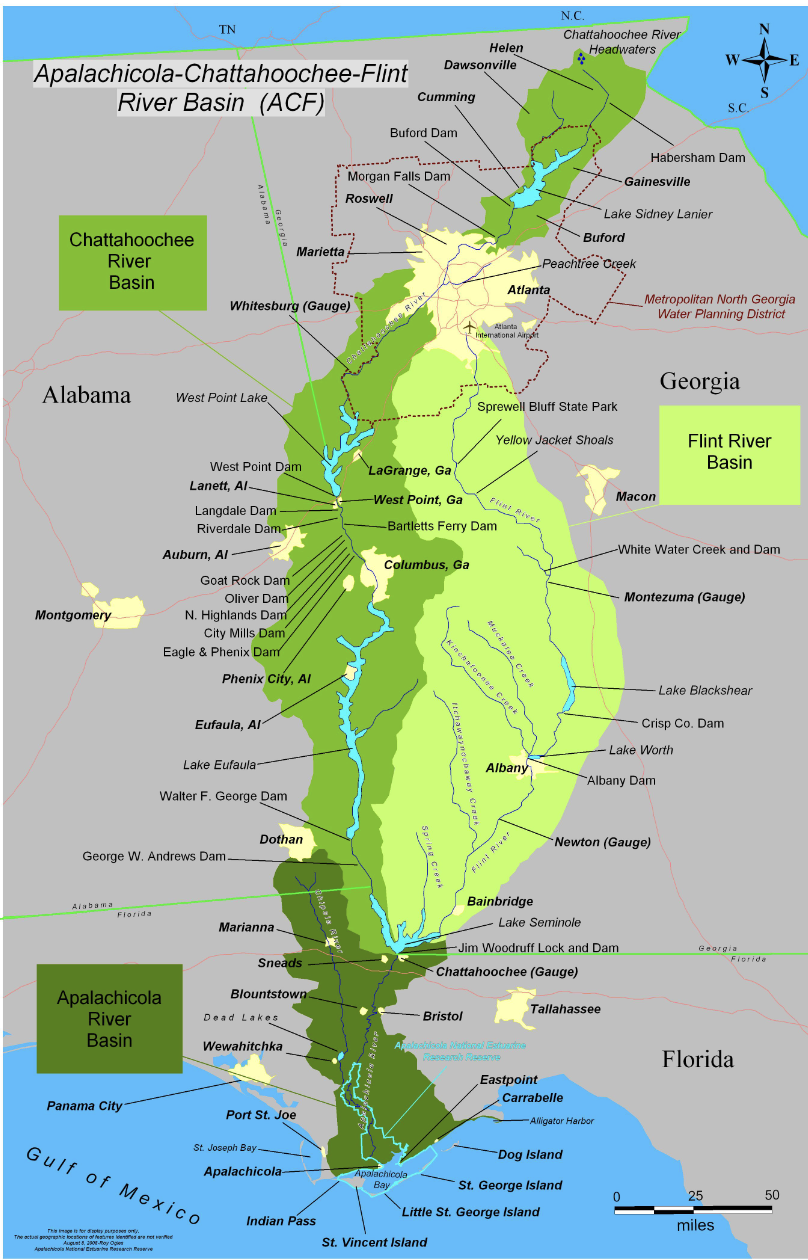
the confluence of the Flint and Chattahoochee Rivers, the
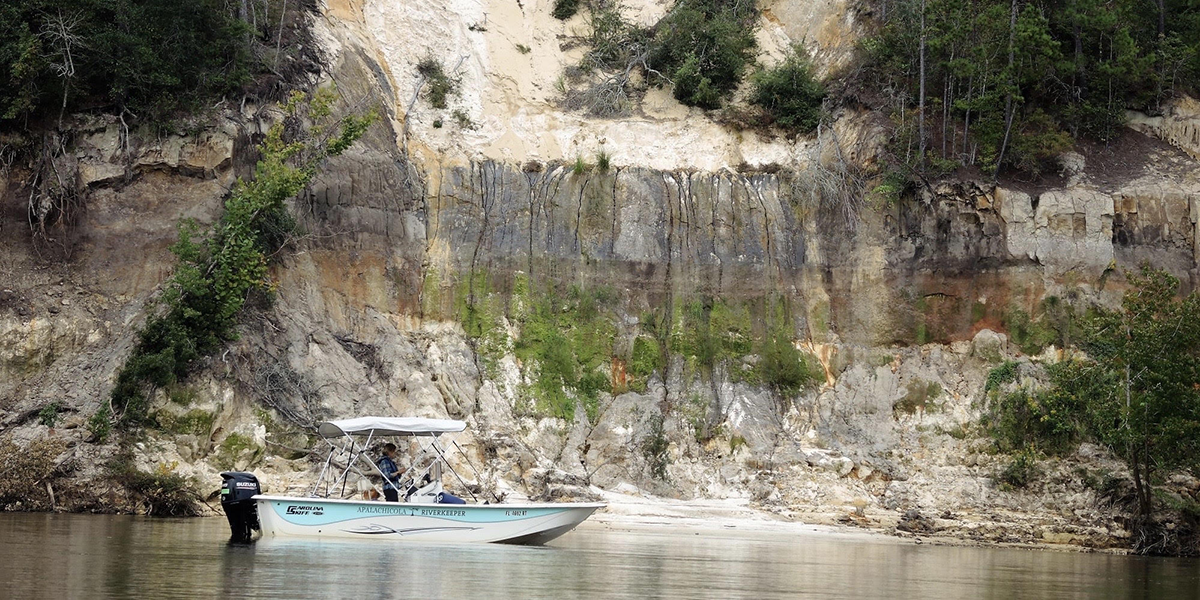
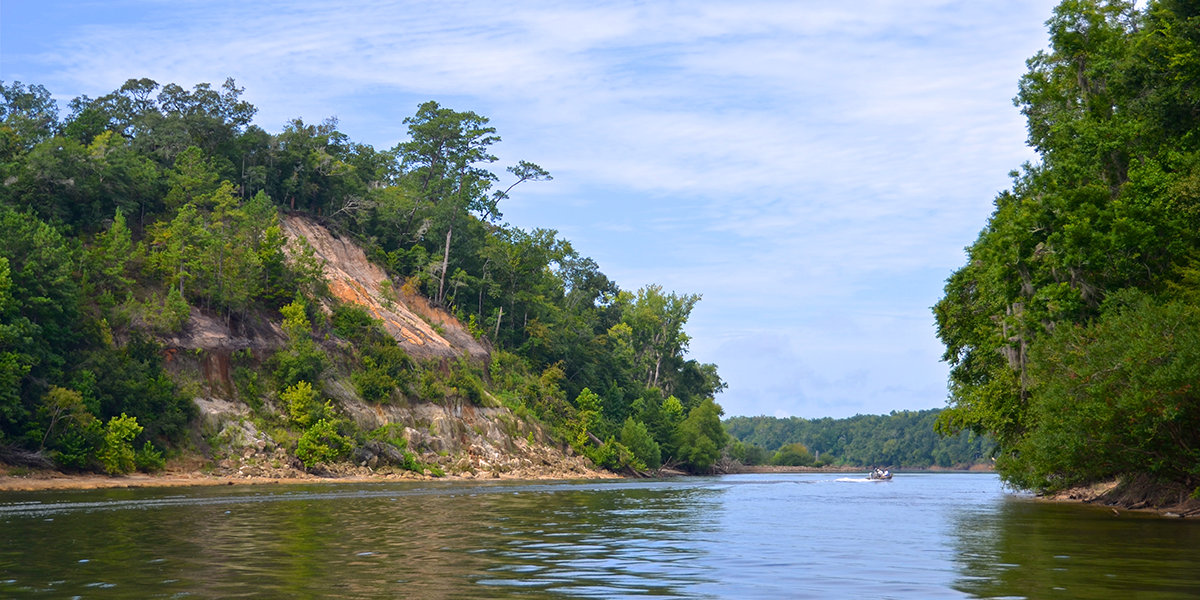
Apalachicola flows from the Georgia/Florida border over 107 miles
through the high bluffs of Grand Ridge and Cody Scarp to the Gulf
Coastal Lowlands before it reaches Apalachicola Bay. This relatively
undeveloped basin plays a major role in supporting a billion dollar
offshore seafood industry in the Gulf of Mexico and produces over
13% of the nation’s oyster production
making up 90% of the oyster harvest in Florida. The Apalachicola
River is the largest in Florida in terms of flow volume and is truly
an American treasure. Apalachicola Bay has been recognized as an
exceptionally valuable estuarine system, one of the most outstanding
left in the United States, and as such, has received numerous
protective designations (e.g. Outstanding Florida Water, Florida
Aquatic Preserve, National Estuarine Research Reserve, and UNESCO
Man in the Biosphere Reserve).
The Threats
The Apalachicola Riverkeeper has identified four priority and
inter-related threats to the clean water, ecological productivity,
biological diversity, and economy of our Basin:
- Reduction of Life-Sustaining Freshwater
- Loss of Floodplain Habitat
- Point and Non-Point Source Pollution
- Explosive Growth and Development
Our
Goals Through strategic
planning the staff and Board of Directors developed the following
five goals:
GOAL 1: Secure an Ecologically and Economically Equitable
Allocation of the Freshwater in the
Apalachicola-Chattahoochee-Flint (ACF) System – The
Apalachicola River and Bay must have a flow regime that will sustain
their function and productivity; the flow regime should mimic the
historical, natural system and be of adequate quantity, delivered at
the right time to nurture the extensive floodplain habitat and
nursery, and the extensive local commercial oyster, shellfish and
finfish fishery. We are working closely with the Franklin County
Seafood Workers Association in the “media wars” and with other
Florida Stakeholders such as the Florida Wildlife Federation, The
Nature Conservancy, 1000 Friends of Florida and concerned citizens
to make Florida’s official position support a healthy ecosystem and
economy in the Apalachicola basin.
GOAL 2: Assist in the Restoration Programs – The
Apalachicola River floodplain has undergone extensive
degradation from years of dredging and poor disposal practices.
We will continue to advocate for a permanent end to the routine
dredging of the river. The State of Florida has agreed that
dredging is economically wasteful and environmentally
destructive and adopted our position by denying the US Army
Corps of Engineers permit to dredge. In addition, we are working
with the Northwest Florida Water Management District and the
Florida Fish and Wildlife Conservation Commission on restoration
efforts related to past dredging activities.
GOAL 3: Protect and Restore Water Quality – In our Lanark
Reef Sea Grass Protection Project we are: 1) emplacing caution
buoys to alert boaters to stay out of or go slowly in shallow,
sensitive sea grass beds in the Lanark Reef area; 2) designing
kiosks to educate the public about the values of sea grass beds
and how to protect them; and 3) conducting a migratory bird
survey for the US Fish and Wildlife Service to document the use
of Lanark Reef and other areas of Franklin County as crucial
habitat for migratory shorebirds.
GOAL 4: Create Balanced Growth – We are working the
Franklin County Citizens’ Advisory Committee to produce
ecologically sound recommendations to improve the effectiveness
of the Franklin County comprehensive plan.
GOAL 5: Promote the Work of the Apalachicola Riverkeeper
– We must develop and strengthen the infrastructure, financial
support, community support, and membership necessary to sustain
the Riverkeeper as a dynamic and effective organization.
Our Mission Statement
The mission of the
Apalachicola Riverkeeper is to provide stewardship and advocacy
for the protection of the Apalachicola River and Bay, its
tributaries and watersheds, in order to improve and maintain its
environmental integrity, and to preserve the natural scenic,
recreational and commercial fishing character of these
waterways.

|